
by MHI
MHI Stands with the Iranian People
in Their Fight Against Imperialism,
Monarchism, and the Islamic Republic
The task of toppling the Islamic Republic of Iran and establishing a democratic republic can only be realized by the revolutionary movement in Iran. Marxist-Humanist Initiative unflinchingly supports the people of Iran in their fight against the Israeli-US military campaign, the imperialist-aligned Iranian monarchist movement, the rule of the Islamic Republic, and the regime’s defenders on “the left.”
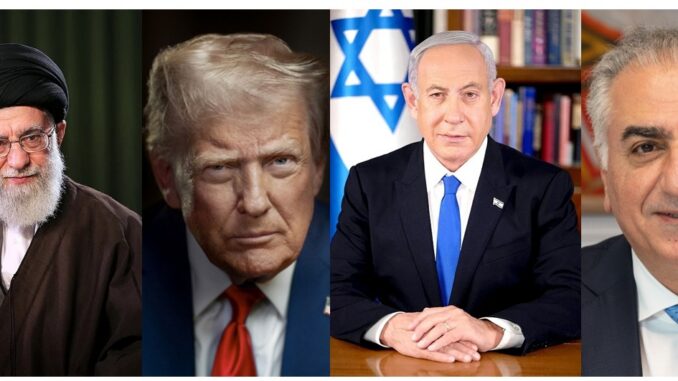
Donald Trump and Benjamin Netanyahu coordinated airstrikes on 19 different locations in Iran, killed Ayatollah Ali Khameini, massacred hundreds of civilians—including children—and started a new war in the Middle East. Any declarations from them that they did this so that Iranian people can “take over” their government are nothing but cynical misdirection.
As history repeatedly shows us, neither Trump nor Netanyahu cares about democracy, the Iranian people, human rights and freedoms, or even human life in general. They care only about themselves. And it is in the context of their increasingly desperate attempts to maintain power that this new war must be understood.
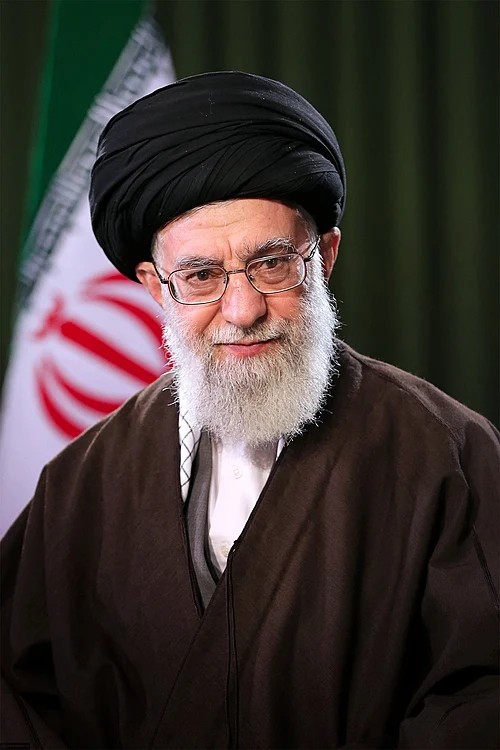
Similarly, monarchists inside and outside of Iran are attempting to establish the crown prince Reza Pahlavi as leader of their “Lion and Sun Revolution” and the only feasible alternative to the current regime. If the Iranian people are to be free from authoritarianism, the monarchists must be stopped.
The so-called “anti-imperialist” left has begun to come to the defense of the Islamic Republic. It would be a mistake to construe this as “international solidarity” with the people of Iran—even less as socialist internationalism. To defend the Islamic Republic is to defend a capitalist and patriarchal regime that represses aspirations of autonomy and national independence among its religious and ethnic minorities and does not hesitate to wage war against its own population.
MHI agrees with Lenin that the goal of socialist internationalism is to “secure national peace … equal rights and to create the best conditions for the class struggle.”[1] In other words, a socialist internationalist response does not lend support to any bourgeois power, including the Islamic Republic. In our view, socialist internationalists must unflinchingly support the people of Iran, who are in the miserable position of defending themselves and their country against Israeli and American intervention, the monarchists waiting in the wings to seize power, and their own theocratic government.
A New Chapter of War and Chaos in the Middle East
While it feels terrifyingly familiar to say we might be on the precipice of World War III, what is taking place now is not just a repeat of previous rounds of Israeli-US aggression against Iran.
Writing for The Guardian on Sunday, March 1, Jason Burke argued that “The joint US-Israel offensive opens a new chapter in US intervention in the Middle East and brings the prospect of a wider war in the region and months of chaos.” Similarly, Elliott Abrams, who served as a special representative for Iran and Venezuela in the first Trump administration, said that “this time is different” for at least three reasons. The first is that “Israeli sources have said that the date of the attack was agreed upon two weeks ago.” The second is that “while the fall of the regime has long been wished for, it has never been the objective of a joint military campaign, nor has any U.S. president so directly called upon Iranians to rise up.” And the third is that “this is a campaign, not a one-off strike.”
Further, BBC’s Jeremy Bower reported that, according to the Israel Defense Forces, Israel’s initial airstrikes on Saturday, February 28, were “the largest in the Israeli Air Force’s history.”
However, what distinguishes this war from previous waves of escalation is not only the higher level of coordination between Israel and the US, the might of their attack, and its different objectives and tactics. The character of Iran’s retaliation is also different. The Islamic Republic has targeted Israel, “civilian infrastructure and US military bases across the Arab Gulf states,” and “the governments in Bahrain, Kuwait, Jordan, Qatar, and the United Arab Emirates.”
According to Al Jazeera, Iran’s Revolutionary Guard Corps has “threatened to launch its ‘most intensive offensive operation’ ever on Israeli and US military installations.”[2] And in his response to Khamenei’s death, Iran’s President Masoud Pezeshkian declared that “Iran considers it its legitimate duty and right to avenge the perpetrators and masterminds of this historic crime.”
Finally, the Gulf states have said that they will retaliate if Iran’s attacks continue, meaning the war may expand. While little about the future is certain, there is much to suggest that Israel and the US have started a regional war in the Middle East or at least have thrown the region into bedlam.
Trump’s Insanity Fits an American Pattern
If Trump’s decision to bomb Iran appears insane, it is because he is suffering from a characteristically American insanity. According to Anne Applebaum, staff writer at The Atlantic, the war on Iran “has been launched without a coherent strategy for the Iranian people, and without a plan to let them decide how to build a legitimate Iranian state.” In her view, “the absence of a broader strategy fits a pattern” of US engagement with Iran.
In fact, Trump’s “halfhearted” pursuit of regime change, to borrow Max Boot’s term, fits a pattern of US engagement in West Asia and North Africa more broadly. In his recent BBC article, Bowen reminds readers that
Saddam Hussein of Iraq was overthrown in 2003 by a huge US-led invasion force. Muammar Gaddafi of Libya was overthrown in 2011 by rebel forces that were provided with an air force by Nato and some Arab states. In both cases, the result was the collapse of the state, civil war and thousands of killings.
Bowen concludes that “There is no precedent for regime change happening just because of air strikes …. Libya is still a failed state. Iraq is still dealing with consequences of the invasion and the bloodletting that followed.” Perhaps Trump is holding out hope that doing the same thing will yield different results this time. Regardless, there is a historical explanation of why hit-and-run wars have become the US’s go-to military strategy—Vietnam.

A massive, youth-led antiwar movement rose up in the US, in the 1960s and early 1970s, to oppose the country’s miliary intervention in Vietnam. Because of this mass radicalization, and because an even larger segment of the American public became disenchanted with the pursuit of wars abroad, especially after the protracted war in Vietnam ended in defeat, US foreign policy has been constrained by the “Vietnam Syndrome” for more than a half-century. Policymakers have been extremely reluctant to commit US ground troops to fight abroad, and especially to commit them in the numbers and for the length of time that military conquest and occupation of foreign countries would require.
Another facet of the Vietnam Syndrome is that the US does not have the ground troops needed to occupy large parts of the globe. The draft (conscription) was abolished in 1973, and the US has had an “all-volunteer” military ever since. Thus, the US has increasingly relied on foreign proxies and allied countries’ military forces to do its bidding, when that is feasible, and hit-and-run campaigns when it is not.
But the Trump regime is having to confront the fact that, even though ground troops have not yet been sent in, its war on Iran is extremely unpopular at home. A YouGov poll conducted on Saturday, the day the war began, found that only 34% of Americans support it, while 44% are opposed and 22% are unsure. As data journalist G. Elliott Morris noted, “[t]his level of support for a foreign war is incredibly low. In comparison, a Gallup poll in November 2001 found 92% of Americans approved of military action in Afghanistan. And a Pew poll in late March 2003 found 71% supported the decision to use force in Iraq. … And it’s worth noting that opinion tends to be most favorable to military action at the beginning of a war.”
Whether Trump’s war against Iran is truly madness, a miscalculation, or plain buffoonery, the point remains the same: it is extremely unlikely that he will get the regime change he ostensibly desires without a ground invasion and an actual strategy for regime change, but this war is already unpopular among Americans, and a ground invasion is likely to make it even more unpopular.
Trump, in other words, is not in a good position. Without a ground invasion, he will almost certainly not achieve his objectives; with one, he may face even more opposition at home. This may explain why he already seems to be walking back his talk of regime change and shifting his objectives.
Netanyahu’s Maniacal Opportunism
The true motivations behind Israel’s part in the campaign are more transparent. According to Bower, “this is a chance” for Netanyahu “to do as much damage as possible to the regime in Tehran and to Iran’s military capacity,” which will likely help Netanyahu “maintain the sense … that he is uniquely positioned to deal with Israel’s enemies” during the election year.
Ori Goldberg argues a similar point in his prescient +972 article, “Israel’s Lonely Push for War with Iran,” published just two days before the war began. Goldberg emphasizes that Israel’s genocidal campaign in Gaza has “fallen short of its own declared war aims: the destruction of Hamas and the recovery of all 251 hostages, 85 of whom were killed.”
In other words, it has been a military, political, and moral failure. A failure that has led to Israel’s increasing international isolation.
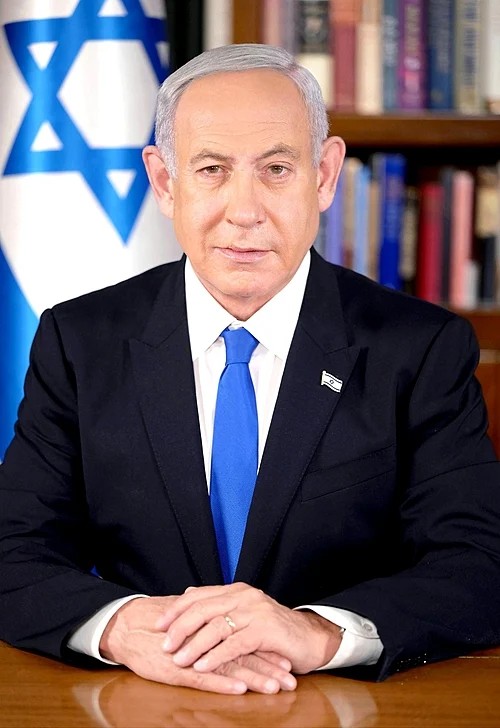
Goldberg argues that in addition to increasing isolation, a “deepening internal crisis” is developing in Israel. According to Goldberg, this crisis includes “the hollowing out of state institutions,” erosion of “Jewish public confidence in the national police force” due to the “visible failure of policing in Palestinian communities,” and a “steady deterioration in everyday life” marked by a climbing cost of living and “harassment, social friction, and conflict.”
To restore “Jewish-Israeli social cohesion,” in Goldberg’s view, Netanyahu needed a “unifying distraction.” The war with Iran is such a distraction. Just as Israel’s near-annihilation of Gaza kept him out of jail, a protracted war with Iran could keep him at the head of government.
Solidarity with the Revolutionary Movement in Iran!
A core principle of Marxist-Humanism is that there are “two worlds” in every country: the world of the rulers and the world of the ruled. Following this principle, MHI opposes the joint Israeli-US military campaign against Iran, the scheming of the monarchists, and the Islamic regime—none of which represent the interests of the ruled.
We oppose the current war because it will bring suffering and death to people in Iran, Israel, and the Middle East and make the day-to-day functioning of the progressive and revolutionary movements in every country there even more difficult.
Further, we oppose the current war because the joint Israeli-US campaign is yet another “blow to the tottering system of international law.”
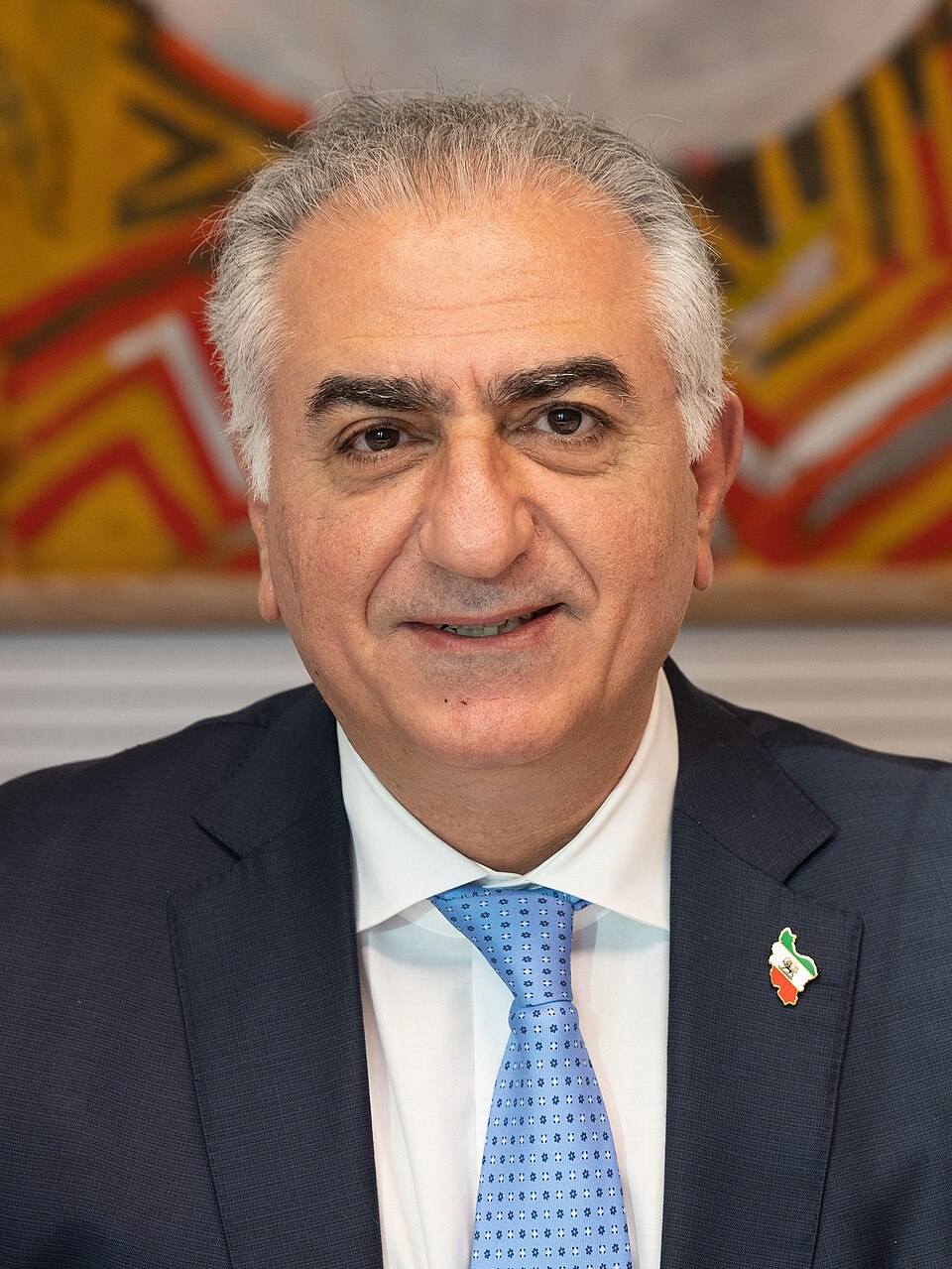
We are not convinced that the killing of Khamenei and other leaders in Iran will lead to an era of national peace. Instead, we are worried that more violence is imminent, because his likely successors, “the hegemonic force within [the] opposition” to the Islamic Republic, are no less corrupt than it is. According to the Slingers Collective, a group of independent Iranian Marxists, this “fascist current … has already declared it will exact brutal revenge on everyone, especially on the oppressed classes.”
We nonetheless oppose the rule of the Islamic Republic because we stand with the people of Iran. Here, it is worth letting the Iranian revolutionaries of the Slingers Collective speak for themselves:
the Islamic Republic is a criminal regime that, over the past eight years alone, has massacred thousands of militant workers and members of other social strata in the streets and prisons. … [I]ts rule rests on the suppression of an emancipatory revolution, during which thousands of communists and revolutionary Muslim leftists were executed, and all left parties, organizations, workers’ and popular councils, unions, and revolutionary collectives were destroyed. …
Campist currents, some of which also exist in Iranian variants, habitually operate within geopolitical fault lines and, by abandoning class struggle, devolve into a “left without a class.” In practice, they become little more than an anti-class propaganda apparatus for capitalist states. They are enemies of the working class who wear red masks, yet show no concern for the daily massacre of millions of workers who can no longer afford even the most basic food and who are forced to accept death as an ordinary outcome when they fall ill. We therefore have nothing to say to this strand of the left. We regard it as part of the camp of the class enemy and as an accomplice of capitalism and imperialism.
Thus, we see it as the immediate responsibility of socialist internationalists to support and assist the organizations and tendencies in the anti-war movement outside of Iran that are trying to coordinate their work with the organizations and tendencies in Iran that oppose not just Israeli and US imperialism (and the allied monarchist reaction) but also to the Islamic Republic.
Most of this responsibility falls on socialist internationalists in Israel and the United States, where it may take mass refusal, or even a general strike, to end the war.
NOTES
[1] Our emphasis.
[2] See March 1, 2026, 23:45 GMT update.

Be the first to comment